



 Home /
 Electric Control Valve Installation for HVAC Heat Exchange System — Philippines Project Case

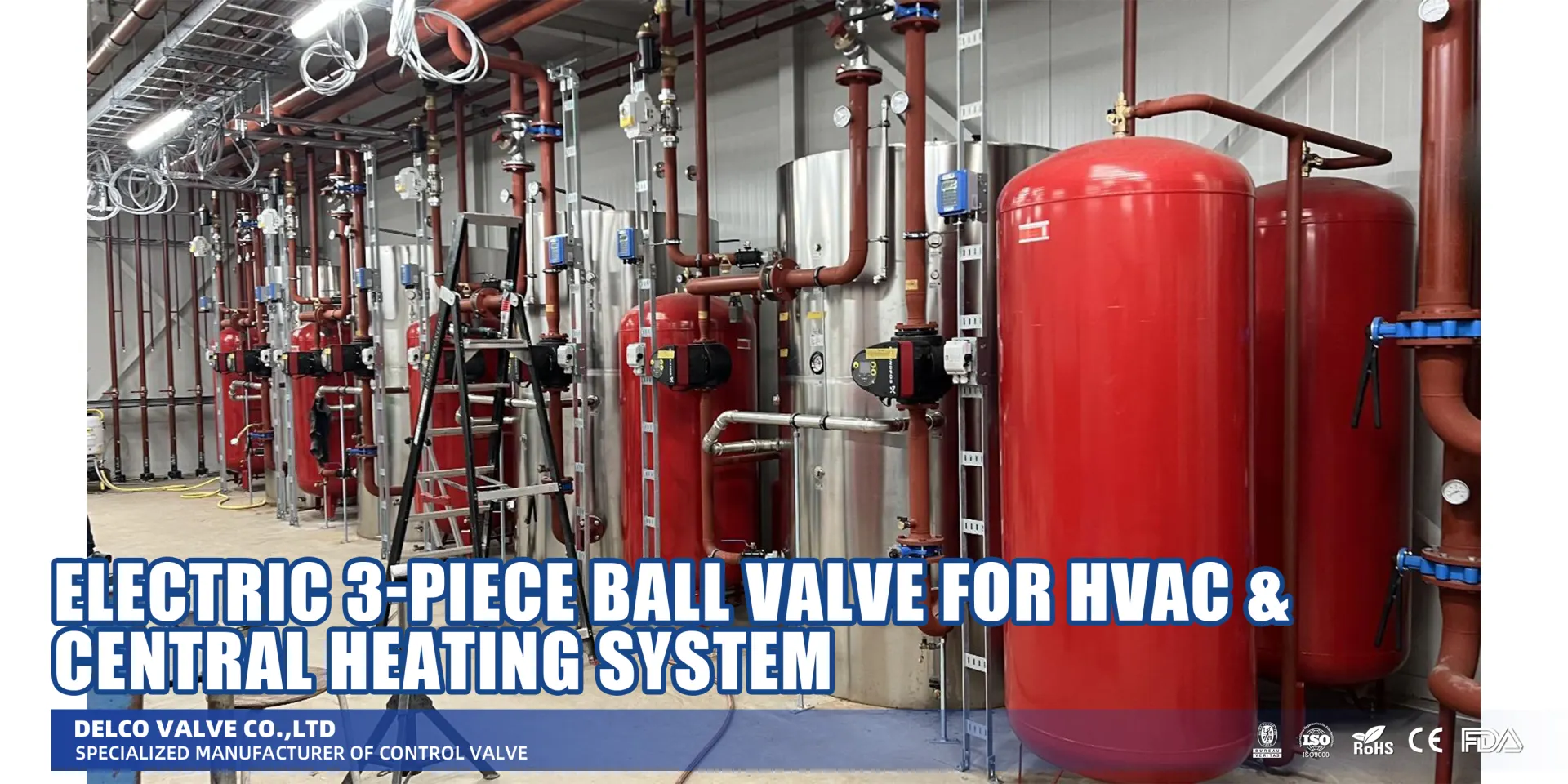
Electric Control Valve Installation for HVAC Heat Exchange System in Philippines Project Case stable temperature control and efficient flow regulation
Philippines HVAC Heat Exchange System Project Overview
The continuous expansion of commercial and industrial infrastructure in the Philippines demands highly efficient HVAC heat exchange systems. This project case showcases a modern commercial facility equipped with advanced thermal management solutions to maintain strict climate control and energy efficiency under challenging tropical conditions.
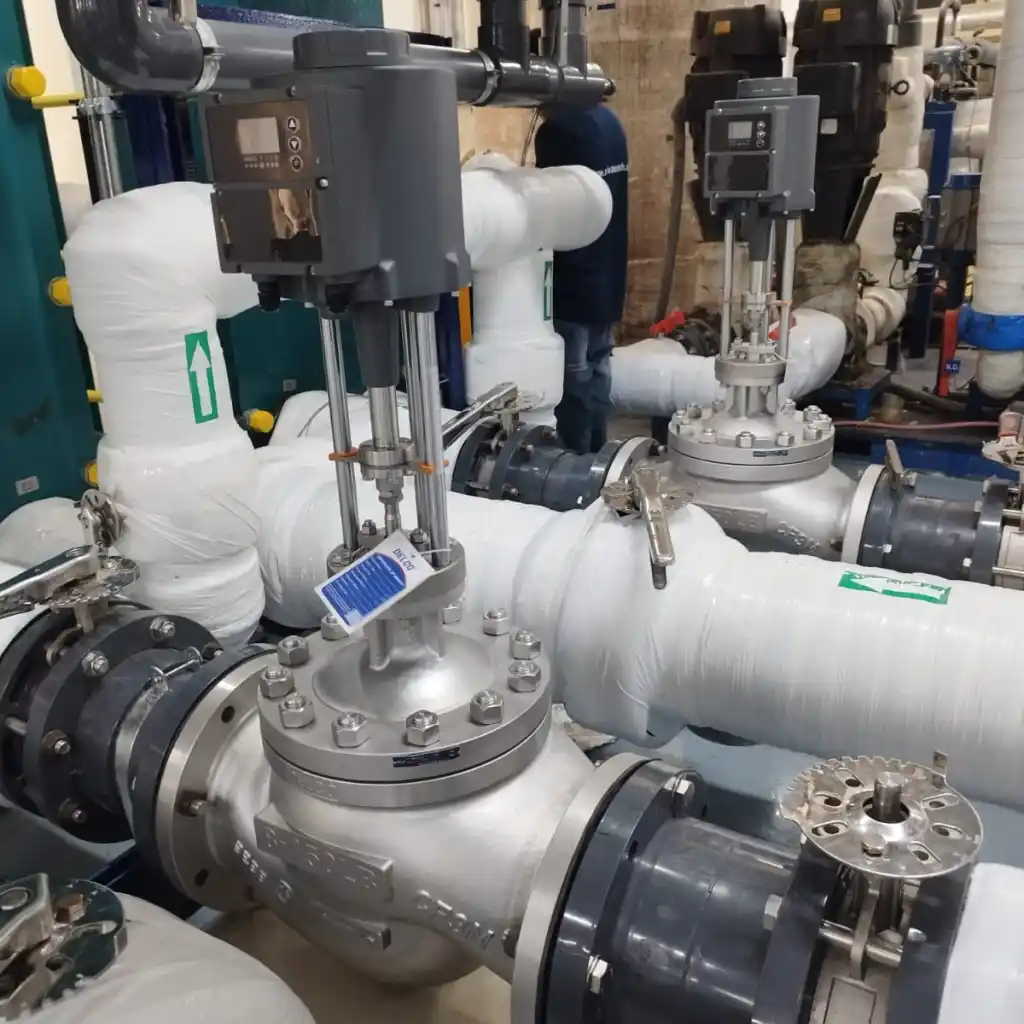
Project Background and Application Scenario
Rapid urbanization in the Philippines requires heavy-duty cooling and thermal control infrastructure. High ambient temperatures and elevated humidity levels place extreme thermal loads on central HVAC systems, making precise fluid regulation essential.
- Project Location: Commercial Complex, Philippines
- System Type: Centralized HVAC Heat Exchange Station
- Primary Application: Fluid regulation across high-capacity heat exchangers
- Core Objective: Deliver consistent temperature regulation and maximize thermal transfer efficiency
Heating and Cooling System Requirements for Temperature Stability
Fluctuating load demands in large facilities require instantaneous thermal balancing. The system must meet strict operational standards to eliminate energy waste and prevent mechanical stress:
| Operational Requirement | Target Performance | System Impact |
|---|---|---|
| Temperature Precision | Variance within ±0.5°C | Prevents thermal shocks and ensures indoor comfort |
| Flow Adjustment | Dynamic proportional response | Matches continuous load variations automatically |
| System Reliability | 24/7 continuous duty | Eliminates costly operational downtime |
| Energy Efficiency | Optimized fluid circulation | Reduces overall pumping power consumption |
Project Details: Electric Control Valve Application in Heat Exchange Station
To achieve precise dynamic balancing, our high-performance electric control valve was integrated directly into the primary media loop of the heat exchange station.
- Core Component: Modulating Electric Control Valve
- Primary Function: Regulates primary water flow into the heat exchanger based on real-time thermal load.
- System Integration: Interfaced directly with the Building Automation System (BAS) via analog signals for continuous monitoring and dynamic adjustment.
- Performance Gain: Delivers immediate response to system temperature changes and maintains accurate secondary-side outlet temperatures.
Project Challenge: Maintaining Stable Heat Exchange Temperature Control
In our Philippines HVAC heat exchange system project, achieving steady thermal performance was our primary obstacle. Commercial heat exchange stations require exact supply temperatures regardless of external weather changes or fluctuating building demands. Slight imbalances on the primary supply side rapidly disrupt the secondary loop, risking energy waste and unstable indoor climates.
Need for Accurate Hot Water Flow Regulation
Controlling secondary outlet temperatures requires strict control over the primary hot water flow. Traditional manual valves or crude on-off controls couldn't handle the fast-shifting load demands of this facility.
To prevent sudden temperature spikes and maintain tight tolerances, we needed an electric temperature control valve for high-precision regulation capable of micro-adjusting flow rates in real time.
| Control Challenge | Impact on HVAC System | Required Valve Feature |
|---|---|---|
| Flow Instability | Thermal overshoot and fluctuating secondary output | Fine linear flow control & modulating stroke |
| Manual Adjustments | High labor costs and continuous temperature lag | Automated electric actuator response |
| Energy Inefficiency | Excess fuel and power usage in primary loop | Accurate throttling based on real-time feedback |
Continuous High Temperature Circulation Requirements
Heat exchange loops run continuously under elevated temperatures and fluid pressures. Standard valves often fail in these heavy-duty environments due to component degradation, stem binding, or actuator fatigue.
- Thermal Stress: Constant hot water circulation degrades lower-grade soft seals, leading to internal leakage.
- Actuator Overheating: Inadequate heat insulation between the valve body and actuator damages sensitive electronics.
- Pressure Fluctuations: Hydraulic spikes during peak demand hours can misalign imprecise valve stems.
Automatic Adjustment According to System Temperature Changes
The site’s HVAC automation system demands instantaneous dynamic responses. As building occupancy shifts throughout the day, sensor feedback registers rapid thermal changes in the return lines.
Without a responsive motorized control valve adjusting dynamically to input signals, the heat exchange station suffers from slow response times, erratic secondary temperatures, and wasted energy. Automating this feedback loop was non-negotiable for consistent long-term performance.
2>DELCO Electric Control Valve Solution for HVAC Heat Exchange System
To overcome the temperature fluctuations in the Philippines project site, we designed a targeted valve solution engineered specifically for high-efficiency heat exchangers. Our electric control valve setup acts as the primary throttling and modulating unit, balancing media flow dynamically to keep the system output strictly on target.
Electric Control Valve as the Core Temperature Regulation Component
In any modern HVAC heat exchange system, the primary side control valve acts as the heart of the temperature regulation loop. We supplied robust electric 3-piece ball valve solutions for HVAC central heating systems designed to handle continuous duty cycles without loss of position precision.
- Precise Throttling: Regulates primary hot water flow to mirror exact real-time thermal loads.
- Tight Shut-off: Eliminates energy leakage when heating demand drops to zero.
- Compact Footprint: Ideal for modular heat exchange skids with tight piping layouts.
Automatic Flow Adjustment Through Analog Control Signals
Manual valve adjustments cannot keep up with rapidly changing tropical ambient conditions and varying building occupant demands. Our motorized control valve setup utilizes continuous analog positioning to fine-tune the fluid pathway.
By pairing our actuators with a high-performance electric V-type flanged ball valve for modulating flow control, the system achieves precise equal-percentage flow characteristics. The valve opening modulates fluid volume smoothy across the entire operating curve rather than stepping abruptly.
Integration with HVAC Automation and Control System
Seamless integration into the site's central Building Management System (BMS) is essential for modern plant automation. We engineered our electric actuators to interface directly with PLC and DDC controllers.
- Real-time Signal Response: Accepts standard input signals for immediate position adjustments.
- Position Feedback: Returns precise valve angle data to the main controller for loop verification.
- Fault Diagnostics: Transmits operational status and alerts directly to the central control room.
Customized Valve Solution Based on Project Working Conditions
Every heat exchange station presents unique pressure drops, fluid velocities, and media temperatures. As an experienced HVAC control valve supplier, we customized the valve configuration specifically for the operating parameters of this Philippines installation.
| Customization Parameter | Engineering Specification |
|---|---|
| Valve Body & Trim | High-grade materials designed for continuous elevated temperature resistance |
| Flow Characteristic | Modified equal percentage for linear heat transfer control |
| Actuator Torque | Heavy-duty electric actuator with built-in thermal overload protection |
| Failure Mode | Fail-safe position options to protect heat exchanger plates during power loss |
How the Electric Control Valve Works in the Heat Exchange System
In our Philippines HVAC heat exchange system project, achieving exact temperature stability comes down to a seamless, closed-loop control process. The electric control valve acts as the critical execution component, constantly responding to dynamic thermal loads.
Temperature Sensor Sends Feedback Signal to Controller
- Real-time Monitoring: High-precision temperature sensors installed on the secondary side outlet pipeline continuously measure outgoing water temperature.
- Signal Transmission: The sensor feeds instant temperature data back to the central DDC or PLC system.
- Deviation Calculation: The controller compares actual water temperature against the pre-set thermal target to calculate exact adjustment needs.
Controller Outputs 0-10V or 4-20mA Signal to Electric Actuator
Once the heat demand is calculated, the controller transmits an analog command signal to the valve's drive unit:
- Standard Signal Integration: Uses standard 0-10V DC or 4-20mA modulating control signals for pinpoint positioning.
- Rapid Response: The high-torque actuator decodes the signal and adjusts motor rotation without delay.
- Energy Savings: Deploying efficient electric valve actuators maximizes system responsiveness while significantly lowering overall operational energy costs.
Valve Opening Adjustment Controls Primary Water Flow
- Proportional Control: The motorized control valve micro-adjusts its opening percentage between 0% and 100%.
- Precise Flow Throttle: Regulates the high-temperature primary water volume passing through the heat exchanger.
- Hydraulic Balance: Prevents fluid hammering and maintains steady pressure throughout the primary pipeline loop.
Stable Secondary Side Outlet Temperature Maintenance
- Constant Target Temperature: Precise primary flow regulation keeps the secondary supply water locked steadily at the target setpoint.
- Eliminates Overheating: Prevents extreme temperature swings, protecting system piping and heat exchange plates from thermal shock.
- Optimized Performance: Guarantees dependable, continuous heat transfer tailored specifically to local facility demands.
Installation Process at the Philippines Project Site
Electric Control Valve Installation in Heat Exchange Pipeline
We worked closely with the local engineering team in the Philippines to oversee the electric control valve installation for the HVAC heat exchange system. Proper mechanical placement was essential to guarantee long-term reliability and precise thermal regulation:
- Pipeline Orientation: Installed the valve body vertically in the primary hot water supply loop, keeping the electric actuator upright to prevent condensation runoff from entering the electronics housing.
- Flow Stabilization: Maintained standard straight pipe runs upstream and downstream of the valve to minimize flow turbulence across the plug.
- Debris Protection: Installed a Y-strainer directly upstream of the valve body to intercept scale and construction debris, protecting the valve seat.
- Maintenance Bypass: Built an isolated bypass line with isolation valves, allowing site technicians to service the unit without shutting down the entire heat station loop.
For high-capacity, flanged hot water lines, integrating a durable electric flanged ball valve with manual override gives site operators reliable performance and full emergency manual control during power loss.
Electric Actuator Wiring and Signal Connection
Precise temperature regulation depends on clean signal transfer between the central controller and the motorized valve actuator:
- Power Wiring: Terminated stable 24V AC power connections to supply continuous power to the intelligent actuator.
- Control Input: Wired the 4–20mA analog control signal from the site PLC directly into the actuator's modulation board.
- Position Feedback: Connected the 4–20mA output feedback wire back to the HVAC automation system for real-time valve position monitoring.
- Noise Mitigation: Utilized shielded twisted-pair cables grounded at the panel end to prevent electromagnetic interference from nearby pumps and variable frequency drives (VFDs).
If you are setting up similar control systems, our comprehensive electric valve wiring and control guide covers standard terminal layouts and signal wiring best practices.
System Commissioning and Temperature Regulation Testing
After completing the mechanical and electrical setup, we performed full-scale system commissioning to verify modulating accuracy:
- Signal Calibration: Verified zero and span settings, ensuring 4mA corresponding to 0% stem travel (fully closed) and 20mA corresponding to 100% stem travel (fully open).
- Step-Response Testing: Applied step-change signals (e.g., 25% to 75% opening) to verify smooth movement without stem hunting or mechanical vibration.
- Thermal Load Simulation: Simulated fluctuating cooling and heating demands on the secondary water side. The motorized control valve adjusted primary hot water flow within seconds, keeping secondary supply water temperatures stable within a narrow ±0.5°C margin.
On-Site Installation Photos and Project Verification
Our field team completed the final hand-over and sign-off with the project manager:
- Zero Leakage: Pressure testing confirmed zero stem and seal leakage under full operating pressure.
- Thermal Imaging Inspection: Infrared scans showed smooth fluid distribution through the valve body without localized overheating or cavitation.
- BMS Integration: Verified that the BMS workstation accurately reads valve opening percentages and temperature trends in real time.
Technical Features of DELCO Electric Control Valve
We design our electric control valve series specifically to meet the rigorous demands of modern HVAC heat exchange system projects. Here is a breakdown of the core technical features that make our valves a reliable choice for precise temperature and flow management.
Modulating Control Performance for HVAC Applications
Our electric regulating valve delivers precise modulating control to maintain target fluid temperatures without overshoot. Equal Percentage Flow Characteristic: Matches heat exchanger thermal dynamics for linear temperature output. High Turndown Ratio: Ensures stable control across both peak demand and low-load off-peak conditions. Fast Response Time: Quickly adjusts primary hot or chilled water flow to stabilize secondary loop temperatures.
Control Signal Options: 0-10V, 4-20mA, and Intelligent Control
To ensure seamless integration with modern Building Automation Systems (BAS) or BMS, we offer flexible input and feedback signal options: Analog Signals: Standard 0–10V DC or 4–20mA proportional control for precise positioning. Feedback Signals: Real-time 0–10V or 4–20mA position feedback for continuous system monitoring. Intelligent Bus Control: Optional Modbus RTU / BACnet support for digital smart building networks.
Valve Material, Pressure Rating, and Temperature Resistance
We construct our valves using heavy-duty industrial materials to withstand continuous circulation, thermal expansion, and high system pressures. For high-pressure fluid control requirements, we also supply dedicated solutions like our forged steel electric 2-way high pressure ball valve.
| Parameter | Technical Specification |
|---|---|
| Body Material | Ductile Iron (GGG40), Cast Steel (WCB), Stainless Steel (304/316) |
| Nominal Diameter | DN15 to DN300 (1/2" to 12") |
| Nominal Pressure | PN16, PN25, ANSI Class 150/300 |
| Medium Temperature | -20°C to +180°C (Extended options up to +250°C) |
| Leakage Class | Class IV or Class VI (Soft seat tight shutoff) |
Reliable Electric Actuator for Long-Term Operation
The motorized control valve features a high-performance electric actuator engineered for continuous duty in demanding environments. Heavy-Duty Gearbox: Self-locking gear train prevents drift under fluid pressure spikes. Protective Enclosure: IP65 / IP67 rated housing resists moisture and dust in plant mechanical rooms. Safety Features: Built-in thermal overload protection, mechanical limit switches, and a manual override handwheel for emergency operation.
Project Results: Stable Heating Operation and Improved System Efficiency
Our electric control valve installation for the HVAC heat exchange system delivered immediate, measurable performance gains for our Philippines project partner. By replacing unresponsive manual controls with our automated solutions, the facility's heat exchange station achieved rock-solid thermal stability across all operational shifts.
More Accurate Secondary Water Temperature Control
With our high-precision electric control valve serving as the core temperature control valve for the heat exchanger, secondary water supply temperatures now remain strictly within a tight range of ±0.5°C.
- Eliminated Temperature Swings: System hunting and uncomfortable supply spikes were completely resolved.
- Fast Response: The electric regulating valve adjusts instantly when hot water demand fluctuates across different zones.
- Consistent Delivery: Maintaining exact setpoints guarantees predictable comfort without operator intervention.
By delivering precise flow control to improve industrial efficiency, our valve ensures the secondary loop runs at peak consistency regardless of primary supply variations.
Stable Operation During Continuous Heating Cycles
Commercial HVAC heat exchange systems require non-stop reliability. Our hardware maintained stable performance through extended 24/7 heating cycles.
- Heavy-Duty Duty Cycle: The electric actuator handles continuous modulating micro-adjustments without overheating or signal drift.
- Reduced Mechanical Stress: Smooth flow regulation eliminates water hammer, protecting heat exchanger plates and adjacent piping.
- Reliable Feedback: Real-time signal response ensures the valve stays perfectly synchronized with the central building management system.
Optimized Heat Exchange Efficiency and Reduced Energy Loss
Precision flow regulation directly cuts system operating costs. By preventing over-heating and avoiding excess primary hot water flow, we significantly improved overall thermal performance.
| Efficiency Metric | Before DELCO Installation | After DELCO Installation |
|---|---|---|
| Secondary Temp Variance | ±3.5°C (Unstable) | ±0.5°C (Stable) |
| Primary Energy Wasted | High (Excess flow) | Optimized (Exact demand flow) |
| System Response Time | Slow / Manual adjustment | Immediate / Automated modulation |
- Reduced Pumping & Boiler Load: Throttling primary water flow during partial-load conditions cut fuel and power consumption.
- Lower Operating Costs: Wasted heat energy was minimized, dramatically shortening the payback period for our compact motorized control valve installation.
- Longer Equipment Lifespan: Optimized heat transfer rates reduced thermal stress across the entire system infrastructure.
Registered as ## Applications of Electric Control Valves in HVAC Heat Exchange Systems with exact subsections.
Applications of Electric Control Valves in HVAC Heat Exchange Systems
An electric control valve plays a pivotal role in regulating fluid flow and thermal performance across diverse heating and cooling setups. By delivering exact modulation, these valves ensure optimal energy efficiency and stable temperatures throughout complex hydronic networks.
District Heating and Central Heating Systems
In large-scale central heating system installations and regional thermal networks, maintaining balanced hot water distribution is essential.
- Load Matching: Automatically adjusts primary water flow in response to peak demand shifts across municipal or residential zones.
- Energy Savings: Serves as a reliable district heating valve solution, reducing thermal loss and preventing energy waste across long-distance distribution lines.
- System Stability: Protects heat exchangers from sudden pressure surges and thermal shock during heavy operational cycles.
Commercial Building HVAC Systems
Modern high-rises, shopping centers, and office towers rely heavily on an integrated HVAC heat exchange system to maintain indoor comfort.
- Zone Temperature Control: Precise motorized control valve operation modulates chilled or hot water supply to air handling units (AHUs) and fan coil units (FCUs).
- BMS Integration: Connects seamlessly with central automation systems to adjust climate schedules based on building occupancy and ambient outdoor weather.
- Cost Reduction: Minimizes pump workload and operational costs by continuously refining flow rates to match real-time heating and cooling loads.
Industrial Heat Exchange Stations
Manufacturing plants, processing facilities, and heavy industrial sites require strict temperature tolerances during daily operations.
- Process Consistency: Functions as a high-precision temperature control valve for heat exchanger units, safeguarding thermal-sensitive production lines.
- Heavy-Duty Reliability: Built to handle continuous high-temperature and high-pressure circulation without compromising seal integrity.
- Specialized Thermal Control: For demanding industrial media that require constant thermal retention alongside modulating flow, integrating specialized hardware like an electric heating jacket ball valve prevents viscous fluid solidification and maintains steady heat transfer across the entire station.
Why Choose DELCO Electric Control Valve for HVAC Projects
When engineering high-performance climate systems, choosing the right electric control valve determines long-term energy efficiency and operational stability. At DELCO Valve, we combine decades of manufacturing expertise with custom engineering to deliver tailored flow control solutions for every HVAC heat exchange system.
Professional Valve Manufacturing Experience Since 2005
With over two decades of dedicated flow control manufacturing, we have engineered thousands of motorized control valve assemblies for major heat exchange stations worldwide. Selecting an experienced actuated valve supplier ensures your heating and cooling infrastructure operates without unplanned downtime.
- Proven Track Record: Supplying global HVAC, central heating, and district energy projects since 2005.
- Engineering Excellence: In-house technical team dedicated to precise flow sizing, torque calculation, and actuator matching.
- Global Footprint: Field-tested installations operating continuously across Asia-Pacific, Europe, and the Americas.
Customized Solutions for Different Working Conditions
Every project presents unique temperature profiles, pressure drops, and media flow requirements. We build each electric regulating valve to match exact site parameters rather than pushing off-the-shelf compromises.
| Parameter | Standard Offering | Custom Option |
|---|---|---|
| Valve Size | DN15 – DN300 | Up to DN1200 |
| Pressure Rating | PN16 / PN25 / Class 150 | PN40 / Class 300 |
| Control Signal | 0–10V / 4–20mA | Modbus RTU / BACnet / On-Off |
| Body Material | Ductile Iron / Cast Steel | SS304 / SS316 / Duplex Steel |
| Temperature Range | -20°C to 150°C | Up to 350°C High-Temp Seals |
Reliable Quality Control and International Standards
We enforce strict quality management protocols throughout every stage of production to guarantee long-term performance under demanding continuous duty cycles.
- 100% Factory Testing: Every valve undergoes shell pressure and seat leakage testing per ISO 5208 standards before dispatch.
- Precision Signal Calibration: Actuators are pre-calibrated to 0-10V or 4-20mA control signals for plug-and-play field installation.
- Global Certifications: Manufactured and verified under ISO 9001 and CE compliance standards.
Frequently Asked Questions
What Is the Function of an Electric Control Valve in a Heat Exchange System?
An electric control valve acts as the core flow regulation component in a HVAC heat exchange system. It automatically modulates the volume of primary hot or chilled water entering the heat exchanger according to live thermal load demand, keeping the secondary supply water at a stable target temperature.
How Does an Electric Control Valve Regulate HVAC Water Temperature?
The process runs on a continuous feedback loop: Temperature Monitoring: Sensors continually measure the output water temperature on the secondary side. Signal Output: The master controller compares actual values to setpoints and transmits positioning signals. Flow Regulation: The actuator rotates or slides the valve stem to adjust the orifice size, throttling primary flow.
For installations needing tight shut-off and high-precision flow adjustment, using a reliable electric modulating control valve prevents sudden thermal fluctuations and protects downstream equipment.
What Control Signals Are Used for HVAC Electric Control Valves?
We outfit our motorized control valve options with industry-standard analog and digital control capabilities: 0–10V / 2–10V DC: The standard analog voltage setup for building management systems (BMS). 4–20mA: Strong current signal loop ideal for long transmission distances and high-interference environments. Bus Communication: Protocols like Modbus RTU or BACnet for real-time valve position feedback and smart diagnostics.
Can Electric Control Valves Work in High Temperature Heating Systems?
Yes. High-temperature district heating and central water systems demand specific valve body materials and actuator heat shielding. We equip high-temperature models with extended Y-yokes, thermal isolation brackets, and high-performance sealing materials to protect the electrical components and maintain long-term reliability under tough thermal loads.
- Related HVAC Valve Projects and Solutions
Over the years, we have delivered tailored flow control packages to commercial, industrial, and municipal sites across Southeast Asia and global markets. Beyond heat exchange stations, our engineering team configures dedicated valve assemblies for diverse hydronic and water loop setups.
Key Applications & Specialized Solutions
- District Heating & Cooling Networks: Custom electric regulating valve setups designed for secondary heat exchange stations, ensuring stable pressure and flow across multi-building distribution systems.
- Commercial High-Rise HVAC Systems: High-precision motorized control valve assemblies integrated directly into central chilled water loops and cooling tower circuits.
- Process Heat Exchangers & Water Treatment: For compact auxiliary lines or automated fluid handling, our specialized threaded ball valve for HVAC and water treatment delivers dependable shutoff and precise automated modulation.
As a trusted HVAC control valve supplier, we combine field-tested valve designs with robust electric actuators to keep your entire thermal exchange loop operating at peak efficiency.
Request a Customized Electric Control Valve Solution from DELCO Valve
Every HVAC heat exchange system operates under distinct temperature, pressure, and flow dynamics. As demonstrated in our Philippines project, generic valve setups often struggle to maintain tight temperature control under changing loads. At DELCO Valve, we engineer customized electric control valve solutions tailored directly to your site conditions.
Tailored Valve Engineering for HVAC Projects
Whether your system requires a high-precision electric globe control valve for primary water throttling or an electric 3-way control valve for mixing and diverting loops, we deliver components built for exact system integration.
- Exact Sizing & Trim Design: Customized valve sizing from DN15 to DN600 with single-seat or sleeve trims to handle high differential pressures without cavitation.
- Flexible Actuation & Control: Full compatibility with 0–10V, 4–20mA, or smart digital control protocols for seamless integration into existing BAS/BMS platforms.
- Robust Material Options: Cast iron, ductile iron, carbon steel, and stainless steel bodies designed to withstand continuous high-temperature heating cycles.
- End-to-End Technical Assistance: Comprehensive engineering support covering sizing calculations, actuator wiring, and on-site commissioning guidance.
DELCO Valve provides the reliability, precision, and manufacturing expertise needed to optimize heat transfer efficiency and lower long-term operating costs across commercial and industrial HVAC installations worldwide.
Share on Social:


- PREV: Electric 3-Piece Ball Valve for HVAC & Central Heating System — Russia Project Case
- NEXT: Not NEXT