



 Home /
 Gate Valve vs Ball Valve: Key Differences & How to Choose

Ball Valve Maintenance Guide Preventive Routine Procedures 2026
Nov 29, 2025
Gate Valve Guide: Working Principles, Types & Uses (2026)
Dec 30, 2025
Gate Valve vs Globe Valve: How to Choose the Right Pipeline Valve
May 21, 2026
Electric Ball Valve for Seawater Treatment: Saudi Arabia Project Case Study
Aug 26, 2026
A gate valve closes by lifting a wedge-shaped gate out of the flow path, and is built for infrequent full-open / full-close isolation with almost no flow restriction. A ball valve closes by rotating a bored sphere a quarter turn, and is built for fast, frequent operation with bubble-tight sealing.
In practice: choose a gate valve for large-diameter, high-temperature lines that stay open most of the time — steam headers, water transmission mains, oil and gas pipelines. Choose a ball valve when you need quick shut-off, tight sealing, frequent cycling, or easy automation — process lines, compressed air, HVAC loops, and skid-mounted equipment.
This guide compares the two valve families across eight engineering criteria — with the standards and numbers behind each claim — and ends with a selection framework you can apply directly to your working conditions.
Gate Valve vs Ball Valve at a Glance
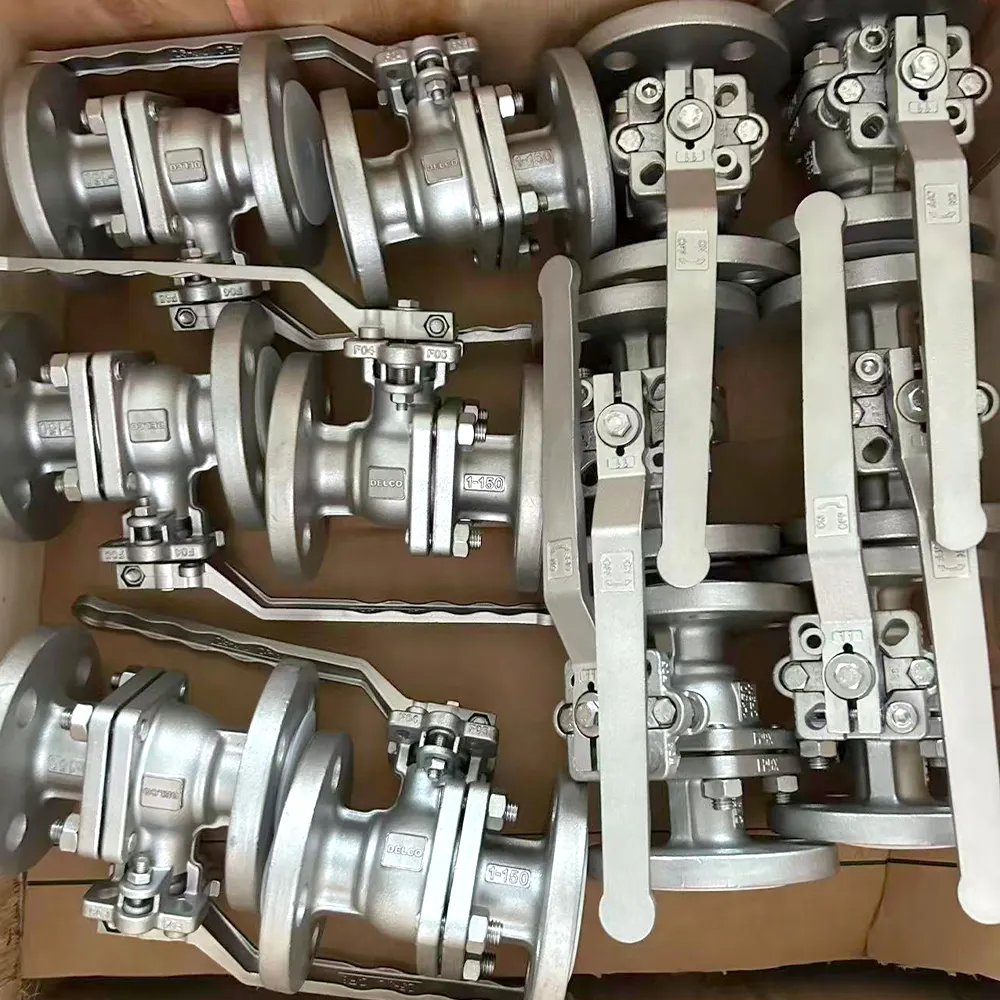
| Factor | Gate Valve | Ball Valve |
|---|---|---|
| Motion | Multi-turn handwheel, linear gate | 90° quarter-turn, rotating ball |
| Opening / closing speed | Slow — dozens of turns on larger sizes | Fast — one quarter turn |
| Shutoff tightness | Metal-seated designs allow a finite leakage rate (typically ISO 5208 Rate B or lower); resilient-wedge designs seal tighter | Bubble-tight with soft seats — typically ISO 5208 Rate A |
| Pressure drop | Very low when fully open — straight-through flow path | Very low when full-bore; noticeably higher when reduced-bore |
| Throttling | Not suitable — causes vibration and seat erosion | Not suitable in standard form — V-port designs are for modulation |
| Size & pressure class | Dominates large diameters and high pressure classes (API 600 / API 6D) | Economical in small/mid sizes; trunnion designs extend to large pipelines |
| Temperature limit | Metal-to-metal sealing handles steam up to ~550 °C | Soft seats limited by polymer: PTFE ≈ 200 °C, PEEK ≈ 300 °C |
| Relative cost | Lower in large diameters | Lower in small diameters (≤ 4") |
| Automation | Multi-turn actuator (ISO 5210) — larger, costlier | Quarter-turn actuator (ISO 5211) — compact, cheaper, spring-return capable |
How Each Valve Works
How a gate valve works
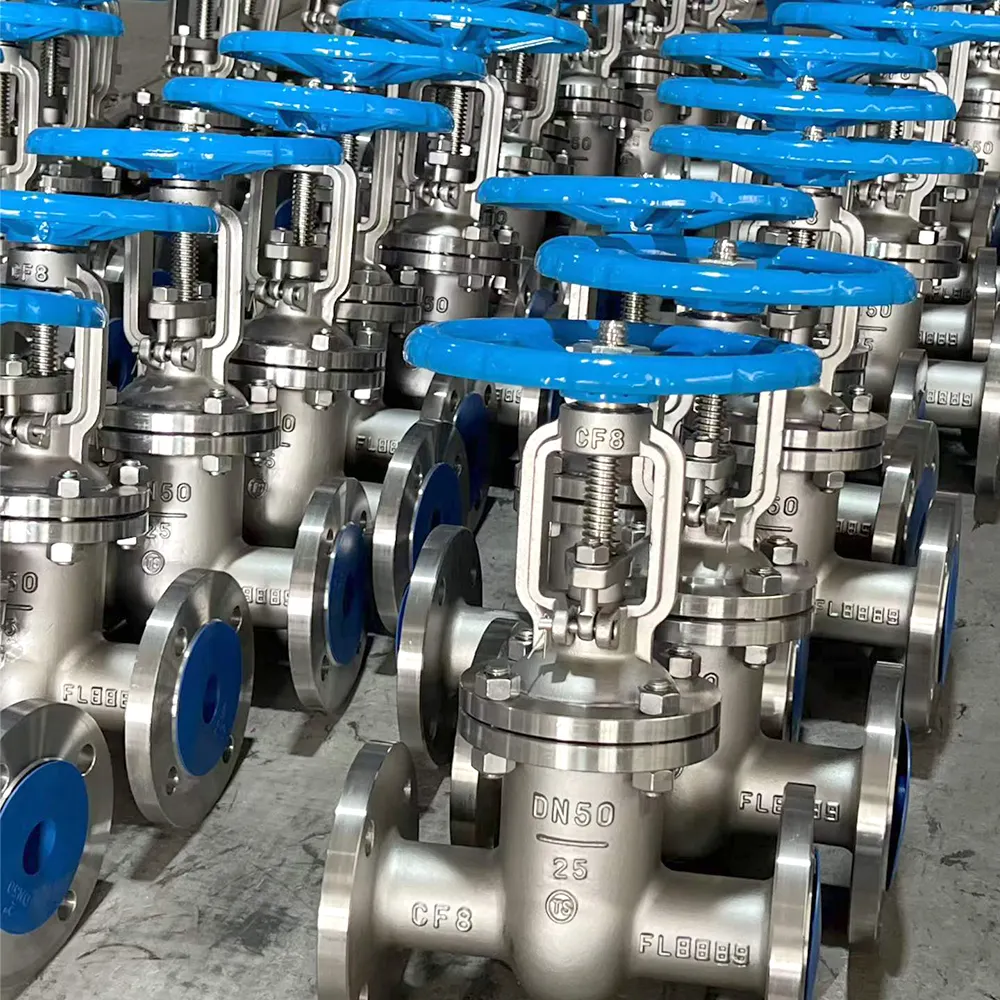
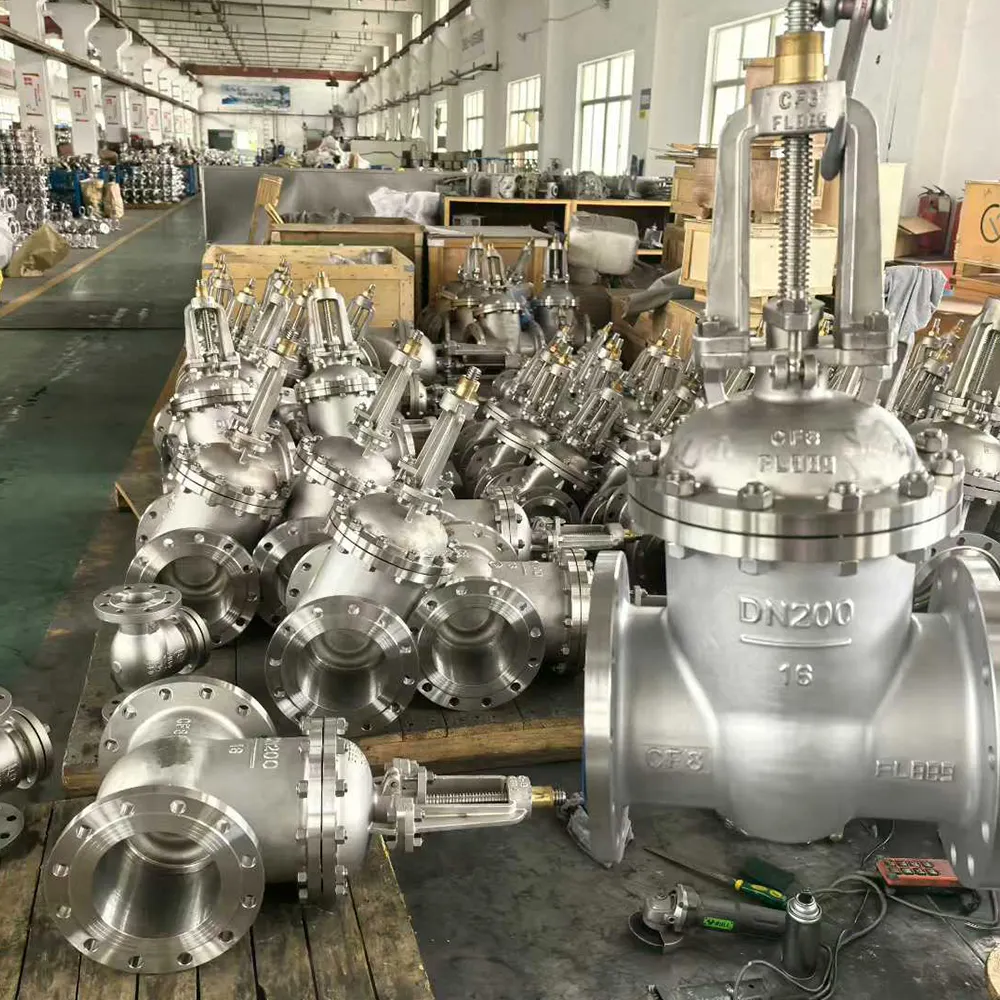
A gate valve raises or lowers a flat or wedge-shaped disc perpendicular to the flow. Turning the handwheel many revolutions moves the gate through threaded stem action until it seats fully against the body seats. The wedge comes in three common forms — solid, flexible, and split — each handling body distortion and thermal expansion differently. Stems are either rising (visual open/closed indication, needs headroom) or non-rising (compact, suited to buried service). See DELCO's manual gate valves for construction details and pressure/temperature limits.
How a ball valve works
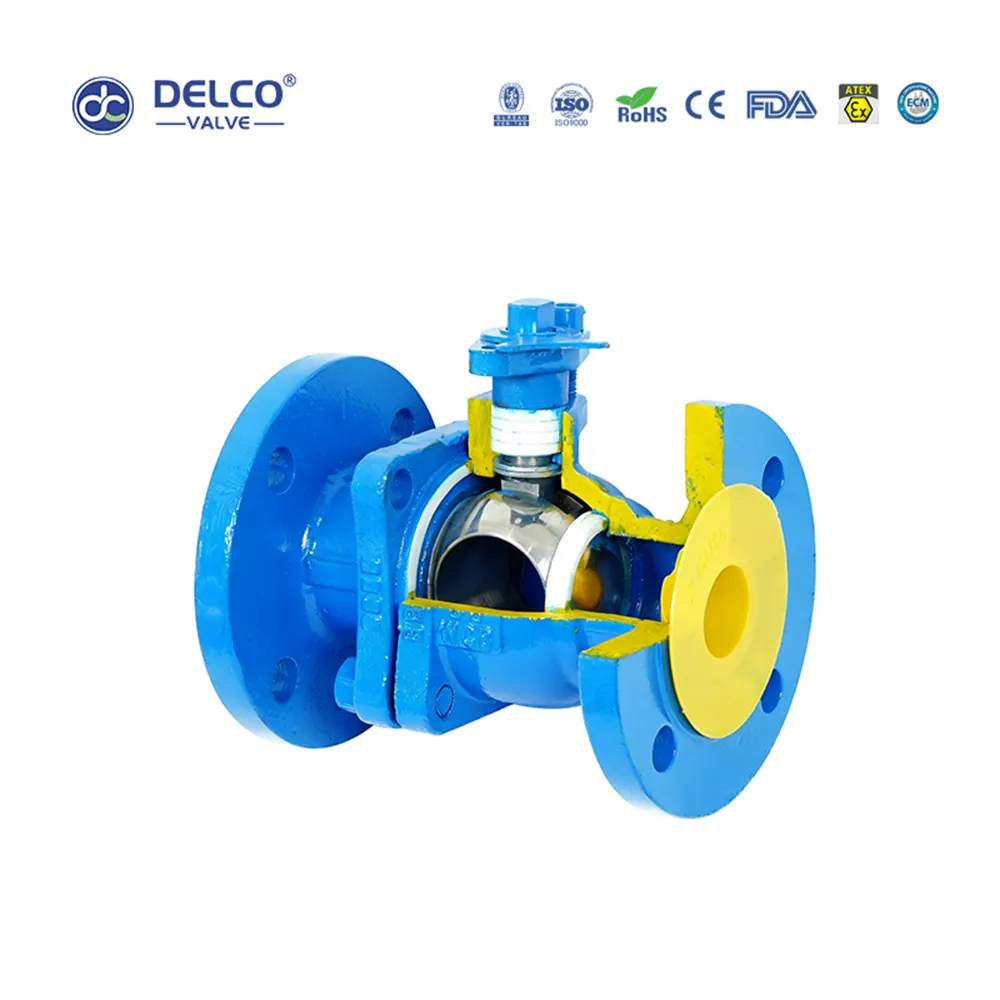
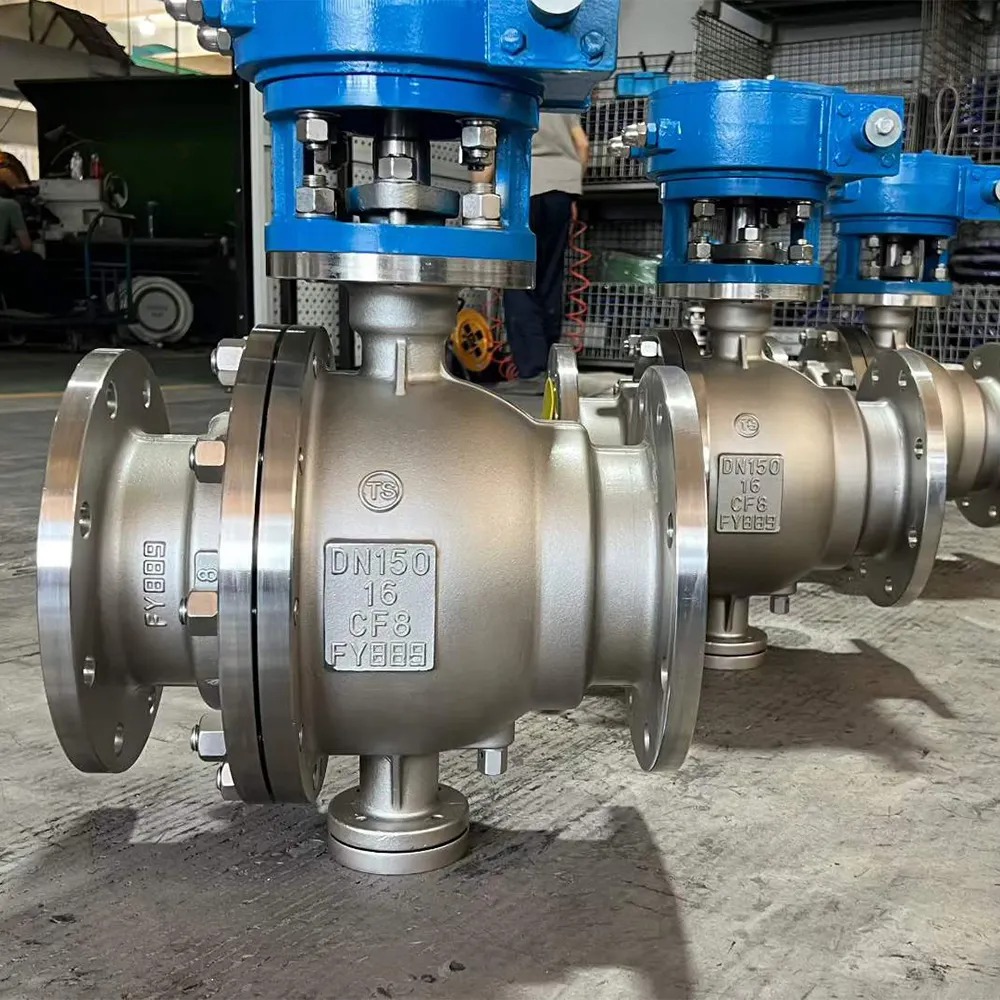
A ball valve rotates a sphere with a machined bore through its center. When the bore aligns with the pipeline, flow passes; a 90° turn presents the solid face to the flow and seals against the seats. Designs are floating ball (the ball presses downstream onto the seat under line pressure — best in smaller sizes) or trunnion-mounted (the ball is fixed on bearings, so seats face less load — used in larger, higher-pressure lines). Bore can be full or reduced, and seat material determines the temperature rating. See DELCO's manual ball valves for the range.
The 8 Key Differences Explained
1. Operation speed and cycling
A gate valve's multi-turn stem means large sizes can take dozens of full handwheel turns to travel from fully open to fully closed. A ball valve does the same job in one quarter turn — about two to three seconds with a lever. This matters most in two situations: frequent cycling (isolation valves on skids, dosing lines, utility headers operated daily) and fast isolation (venting, sampling, emergency lines). If an operator touches the valve several times a day, quarter-turn operation quickly becomes the default choice.
2. Sealing performance and leakage class
This is where the two families differ most in measurable terms. Soft-seated ball valves (PTFE or reinforced PTFE seats) are designed to achieve ISO 5208 Rate A — no visually detectable leakage during the test period — the tightest acceptance class in the standard. Metal-seated gate valves, with rigid metal-to-metal contact across two seating surfaces, are typically accepted at looser rates (Rate B and below), meaning a small defined leakage is permissible; API 598 covers the equivalent test methods for gate, globe and check valves. The consequence for specification: if your process requires true zero-leakage isolation — loading/unloading, toxic media, double isolation requirements — a soft-seated ball valve is the safer starting point. For waterworks, resilient-wedge gate valves with elastomer-coated gates also seal tightly and are a legitimate exception.
3. Pressure drop
The common statement "gate valves have the lowest pressure drop" is true when both valves are full-bore. A fully open gate valve is a straight-through conduit; a full-bore ball valve is nearly identical in flow efficiency. The nuance almost every comparison article misses: reduced-bore ball valves — the standard and cheaper offering in many catalogs — have a bore one or more sizes smaller than the pipe, and their flow coefficient (Cv) is typically 20–40 % lower than the full-bore version of the same line size. On gravity-fed lines, suction sides of pumps, or anywhere you already accept a gate valve's flow efficiency, specifying reduced bore to save cost can quietly cost you system performance. Always compare Cv values, not valve categories.
4. Throttling: why neither valve is designed for it
Both valve families are on/off devices, and both suffer when used to regulate flow. A gate valve held partially open forces the full flow velocity through a narrow gap between the gate and seat: the disc vibrates (chatter), and the high-velocity stream erodes the seating surfaces, so the valve loses its ability to seal when finally closed. A standard ball valve throttled at partial opening damages its soft seats the same way — concentrated flow across a small seat contact area. If your application genuinely needs modulation, specify a V-port ball valve or a control valve designed for it; see DELCO's control valve range for modulating duties.
5. Size and pressure capability
Gate valves dominate where diameter and pressure class climb together. API 600 cast steel gate valves are routinely supplied in Class 150 through Class 2500, and pipeline gate valves per API 6D extend to very large diameters — the geometry scales economically because the gate is simply a bigger plate. Floating-ball designs stay practical to roughly NPS 10–12 before seat loads get extreme; beyond that you move to trunnion-mounted balls, which add bearings, seals and cost. This is why water transmission mains, refinery furnace lines and power plant feedwater systems remain gate valve territory, while ball valves own the small and mid sizes.
6. Temperature limits
The practical ceiling for a ball valve is usually its seat polymer, not its body. PTFE seats are limited to about 200 °C continuous service, glass/reinforced PTFE to roughly 230 °C, and PEEK to about 300 °C — beyond that you need metal-seated ball valves, ideally with a fire-safe design to API 607 (which certifies secondary metal-to-metal sealing if soft seats are destroyed in a fire). Gate valves seal metal-to-metal, so they handle saturated and superheated steam routinely — 425–550 °C service is standard territory, with the actual allowable pressure at temperature governed by the flange/material rating in ASME B16.34. Rule of thumb: above ~250 °C continuous, start with a gate valve unless you have a specific reason for metal-seated ball hardware.
7. Cost and total cost of ownership
At small sizes (up to about 4"), a ball valve is usually cheaper than the equivalent gate valve — a simpler body and soft seats beat a machined wedge and two body seats. The economics reverse in large diameters, where a ball valve's precision sphere and large seats become expensive. But purchase price is only part of the picture. Factor in:
(a) automation cost — a quarter-turn actuator is smaller, simpler and cheaper than the multi-turn actuator with thrust conversion a gate valve needs;
(b) downtime cost — a 3-piece ball valve can be serviced in-line, while many gate valves need removal for seat work;
(c) energy cost — on throttled-by-necessity systems, reduced-bore Cv losses compound annually. On automated lines, ball valves frequently win on total cost of ownership even where the manual valve prices are equal.
8. Maintenance and repairability
A gate valve in clean, infrequent service can run for decades; its typical wear items are stem packing (replaced through the gland) and, eventually, seating surfaces — which on most designs means the valve comes off the line. A ball valve's soft seats and stem seals are finite-life polymers, but architecture matters: 3-piece ball valves unbolt from the pipe and allow seat and seal replacement without disturbing the line, which is why they dominate maintenance-sensitive utilities like heating and chilled water loops. Two ball valve specifics to check at specification stage: trapped cavity pressure (liquid confined in the body cavity between closed seats expands with temperature — spec self-relieving seats per API 6D where applicable) and water hammer from fast quarter-turn closure on long liquid lines (solve with gearing, or an actuator with adjustable closing time).
How to Choose: 6 Questions to Ask Before You Order
- Isolation or modulation? Modulation rules both families out — go to V-port ball or control valves.
- How often will it cycle? Daily operation favors ball valves; a valve that sits open for months favors a gate valve.
- What is the media, temperature and pressure? Above 200 °C continuous, soft seats are out; above 250 °C, gate valves lead. Check ratings against ASME B16.34 at your actual temperature.
- How tight must shutoff be? Zero visible leakage → soft-seated ball valve (ISO 5208 Rate A). Trace leakage acceptable → metal-seated gate valve is fine and cheaper.
- What diameter and installation space? NPS 2–10 automated process line → ball valve. NPS 12+ or high pressure class → price both; rising-stem gate valves need headroom, non-rising stems fit buried chambers.
- Automation — now or later? If an actuator is even possible in the future, choose a ball valve; retrofitting quarter-turn automation is far cheaper.
Valve selection by working condition
| Working condition | Recommended choice | Why |
|---|---|---|
| HVAC heating / chilled water loops | 3-piece ball valve | Frequent cycling, bubble-tight shutoff, in-line serviceability, easy actuation |
| Steam lines above 200 °C | Metal-seated gate valve | Soft polymer seats are the limiting factor for ball valves here |
| Compressed air / instrument air | Ball valve | Fast operation, tight sealing, low cost at small sizes |
| Oil & gas transmission, large diameter | Gate valve (API 6D) | Full-bore pigging capability, economical at high class |
| Water transmission mains | Resilient-wedge gate valve | Non-rising stem options, proven buried service, low unit cost |
| Slurries / media with particles | Knife gate or full-bore ball | Avoid seating surfaces that trap solids; ask us for media-specific advice |
| True flow modulation | V-port ball valve / control valve | Neither standard design is built for throttling |
| Dosing, sampling, skid lines | Full-bore ball valve | Small sizes, frequent operation, compact automation |
Automating Gate Valves vs Ball Valves: Actuators Compared
Automation is where the mechanical difference becomes a procurement decision. A gate valve needs a multi-turn actuator (ISO 5210): the motor turns the stem many revolutions, and the actuator must convert rotation into the high thrust needed to unseat and reseat the wedge under full differential pressure. That means a larger gearbox, torque/thrust monitoring, slower travel — and a visibly higher price tag.
A ball valve needs a quarter-turn actuator (ISO 5211): 90° of rotation, compact body, standard mounting flange. Quarter-turn units are cheaper, faster, and — critically for pneumatic versions — easily configured as spring-return fail-safe (open or close on air failure). This is one reason ball valves dominate automated process skids.
Two engineering notes from our DELCO factory experience: first, size the actuator for the valve's breakaway torque with a safety margin, not the running torque; second, on long liquid lines, program electric actuator closing times (or fit a gear drive) to keep water hammer in check — the same fast closure that makes a ball valve attractive can shock the pipeline it protects.
DELCO manufactures both families matched to our own actuators — see our electric ball valves, electric gate valves and pneumatic-actuated ranges, or download datasheets for dimensions and P/T limits.
FAQs
Can a gate valve be used for throttling?
No. A partially open gate creates a narrow gap where flow velocity concentrates, vibrating the disc and eroding the seating surfaces. The valve then may not seal fully when closed. Gate valves are isolation valves — full open or full close. For modulation, use a V-port ball valve or a control valve.
Which valve is more leak-proof?
A soft-seated ball valve. Its PTFE seats achieve ISO 5208 Rate A — no visible leakage — because the soft polymer conforms to the polished ball surface. Metal-seated gate valves rely on metal-to-metal contact and are accepted at looser leakage rates. For zero-leakage duties, specify a ball valve with soft seats, or a resilient-wedge gate valve in water service.
Which is cheaper, gate valve or ball valve?
Up to about 4", ball valves are usually cheaper. In large diameters and high pressure classes, gate valves win — the ball valve's precision sphere and large seats become costly. For automated lines, add the actuator: quarter-turn automation for ball valves costs less than the multi-turn actuator a gate valve requires.
Can ball valves handle steam?
Not with standard soft seats. PTFE is limited to about 200 °C and degrades with sustained hot water/steam exposure. For steam, use a metal-seated ball valve rated for the service — or, more commonly and economically, a gate valve, which is the traditional steam isolation valve up to ~550 °C.
Which valve is easier to automate?
The ball valve, clearly. Its 90° motion matches compact ISO 5211 quarter-turn actuators that are cheaper, faster and available as pneumatic spring-return fail-safe. A gate valve needs an ISO 5210 multi-turn actuator with thrust conversion — larger, slower and more expensive. If automation is likely, choose the ball valve.
Which valve lasts longer?
Depends on the duty. A gate valve that opens twice a year on a clean water main can serve for decades. A ball valve cycled daily survives because its design tolerates frequent operation and its seats are replaceable in-line (3-piece bodies). Longevity tracks the match between cycling frequency and design — mismatch, not brand, is what kills valves.
Still Deciding? Talk to a Valve Engineer
The fastest way to settle gate vs ball for your line is a five-minute conversation about your media, temperature, pressure and cycling frequency. DELCO's engineers have been specifying and manufacturing both valve families — manual and actuated — since 2005. Send us your working conditions and we'll recommend a model with datasheets (download center) — or request a quote for a pre-assembled valve-and-actuator package.
Share on Social:


Contact Us
In This Article
Ball Valve Maintenance Guide Preventive Routine Procedures 2026
Nov 29, 2025
Gate Valve Guide: Working Principles, Types & Uses (2026)
Dec 30, 2025
Gate Valve vs Globe Valve: How to Choose the Right Pipeline Valve
May 21, 2026
Electric Ball Valve for Seawater Treatment: Saudi Arabia Project Case Study
Aug 26, 2026