



 Home /
 Knife Gate Valve vs. Ball Valve for Abrasive Slurry: Which is Better for Mining?

Difference Between Motorized Valves and Solenoid Valves Features Comparison
Nov 29, 2025
Motorized Ball Valve: The Complete Guide to Types, Wiring, and Selection
Dec 29, 2025

Pneumatic Actuator Valves: The Ultimate Guide to Selection and Use (2026)
Jan 14, 2026
Different Types of Valve Actuators Working Principles and Benefits
Nov 29, 2025
Are you deciding between a knife gate valve and a ball valve for your slurry pipeline? The short answer is: Use a knife gate valve for cost-effective, low-pressure on/off isolation of heavy solids (like tailings discharge). However, if your circuit requires handling high-pressure abrasive media or strict zero-leakage isolation (such as cyclone feeds), a metal-seated trunnion ball valve with Tungsten Carbide coating is the superior choice.
Applying the wrong valve to mining slurry leads to destroyed seals, clogged pipelines, and catastrophic plant downtime. At DELCO Valve, we engineer severe-service automated solutions for Latin America’s toughest mines. In this guide, we bypass basic spec sheets to provide a head-to-head comparison, helping you select the exact valve type that maximizes your pipeline's uptime.
Let's explore which valve is right for your specific circuit.
The Harsh Reality of Slurry Pipelines: Why Standard Valves Fail
In the mining industry, slurry pipelines are the high-stakes arteries of the operation, but they are also the most punishing environments for flow control equipment. Standard valves often fail prematurely because they are engineered for clean fluids, not the high-velocity, multi-phase mixtures found in mineral processing. When a valve cannot withstand the mechanical and chemical demands of abrasive slurry transport, the result is frequent downtime, expensive maintenance, and compromised site safety.
The “Sandblasting” Effect of Abrasive Mining Tailings
Abrasive mining tailings act as a continuous stream of liquid sandpaper. As these particles pass through a valve, particularly during throttling or transition phases, they create a “sandblasting” effect that rapidly destroys internal components.
- Seat Erosion: Standard soft seals are shredded within days, leading to immediate bypass leakage.
- Body Thinning: High-velocity solids wear down the valve walls, risking catastrophic shell failure and environmental contamination.
- Surface Pitting: Even hardened metals can suffer from localized impact damage, destroying the precision finish required for a bubble-tight seal.
Pressure Variations and Clogging Risks in Slurry Transport
Slurry transport is rarely a steady-state process. Sudden pressure variations and flow interruptions cause solids to settle out of suspension, creating significant operational risks that standard valves cannot manage:
- Dewatering and Packing: If a valve design includes “dead spaces” or cavities, solids accumulate and pack tightly, physically preventing the valve from reaching a full close.
- Line Plugging: Poorly designed valve bores create turbulence that encourages “sanding up,” which can block the entire pipeline circuit.
- Structural Fatigue: The high density of mineral processing media increases the impact of pressure surges (water hammer), often exceeding the structural limits of light-duty valves and leading to cracked housings or blown gaskets.
Knife Gate Valves: The Industry Standard for Heavy Slurry Isolation
In our experience across global mining sites, the knife gate valve remains the go-to choice for primary isolation. It is specifically engineered to handle the thick, viscous media found in tailings management systems and mineral processing circuits where other valves simply seize up.
How the Shearing Edge Cuts Through Settled Solids
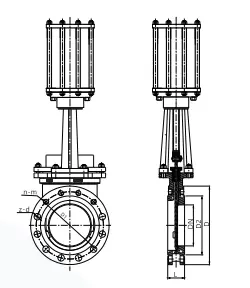
The “knife” in the name isn’t just marketing—it’s a functional necessity. In an abrasive slurry transport line, solids often settle at the bottom of the pipe during downtime. A standard valve would try to compress these solids, leading to a partial closure or a damaged seat. Our heavy duty knife gate valves feature a sharpened, beveled edge that acts like a guillotine. As the gate descends, it slices through packed grit and settled tailings, ensuring the gate reaches the bottom of the chest for a reliable shut-off.
Key Advantages: Cost-Effective, Compact, and Unobstructed Flow
For many operators, the knife gate valve is the most practical solution for slurry pipeline isolation due to several factors:
- Unobstructed Flow Path: When fully open, the valve provides a full-bore, straight-through flow. This minimizes turbulence and prevents the “dead zones” where abrasive particles usually cause erosive wear.
- Space-Saving Design: Its narrow face-to-face dimension makes it incredibly compact, allowing for easier installation in crowded manifold areas.
- Lower CAPEX: Compared to high-end alloy valves, the knife gate offers a significantly lower initial investment for low-to-medium pressure applications.
Engineering Limitations: Pressure Constraints and Sealing Challenges
While these valves are workhorses, they have clear boundaries. Most knife gate designs are intended for lower pressure ratings (typically ASME 150 or lower). In high-pressure environments, the gate can deflect, leading to seat bypass. Additionally, because the gate moves in and out of the packing gland, there is a higher risk of external weeping if the valve isn’t maintained properly. For high solid content media at extreme pressures, the knife gate eventually hits a performance ceiling where more robust technology is required.
Ball Valves for Slurry: High Performance Under Extreme Pressure
The Fatal Mistake: Using Soft-Seated Ball Valves in Abrasive Media
In many mining operations, the biggest mistake we see is installing standard ball valves with soft seats (like PTFE or Devlon) into abrasive slurry transport lines. While these valves work great for water or gas, they fail almost instantly in mining. The sand and ore particles get trapped between the ball and the soft seat, tearing the material to shreds. Once the seat is scarred, you lose your seal, and the resulting “wire-drawing” effect will wash out the valve body in no time.
The Solution: Severe Service Metal-Seated Ball Valves (Tungsten Carbide Coated)
When the pressure is high and the media is aggressive, we move to severe service metal-seated ball valves. These aren’t your off-the-shelf hardware. We use a “mate-lapped” ball and seat set, meaning they are ground together to form a perfect fit. To handle the “sandblasting” effect of the slurry, we apply a Tungsten Carbide coating (TCC) or Chrome Carbide using HVOF spraying. This creates a surface hardness that allows the valve to literally wipe away rocks and scale without taking a scratch.
Key Advantages: Bi-Directional Bubble-Tight Sealing and High-Pressure Rating
For critical slurry pipeline isolation, the metal-seated ball valve is the king of performance.
- Bi-Directional Zero Leakage: Unlike many gate valves, these provide a bubble-tight seal in both directions.
- High Pressure Handling: These valves thrive in ASME 600, 900, and 1500 environments where a knife gate would buckle.
- Trunnion Mounted Design: This keeps the ball locked in place, preventing seat misalignment even under massive flow surges.
- Full Bore Flush Design: When open, the flow path is a straight pipe, minimizing turbulence and seat erosion.
Engineering Limitations: Higher Initial CAPEX and Bulkier Design
The main hurdle for most projects is the higher initial CAPEX. A metal-seated ball valve is a precision-engineered piece of equipment, and the price reflects that. They are also significantly heavier and bulkier than knife gates, requiring more robust support structures. However, we always tell our clients: you can pay for a high-quality valve once, or you can pay for a cheap valve and the labor to replace it every three months. For high-pressure cyclone feed valves or long-distance transport, the investment pays for itself in avoided downtime.
Head-to-Head Comparison: Knife Gate vs. Metal-Seated Ball Valve
When we help mines choose between these two, it usually comes down to the specific demands of the circuit. While both handle abrasive slurry transport, they serve very different roles in terms of pressure and maintenance cycles.
Pressure Handling Capacity: Low/Medium vs. High Pressure Systems
The biggest differentiator is the pressure rating. Standard heavy duty knife gate valves are perfect for gravity-fed lines or low-pressure tailings discharge, typically topping out at 150 to 300 PSI. If you try to push them beyond their limit, the gate can deflect, leading to seat failure.
In contrast, severe service valves like metal-seated ball valves are engineered for high-pressure slurry pipelines. If your system operates at Class 600 or higher, a trunnion-mounted ball valve is the only way to ensure bi-directional zero leakage and structural integrity under load.
Clogging Resistance: Dead Space Cavities vs. Full-Bore Flush Designs
- Knife Gate Valves: These offer a straight-through flow with no bottom cavity, which is great for preventing solids from building up. However, the “gate chest” can sometimes pack with dried slurry if the valve isn’t cycled regularly.
- Metal-Seated Ball Valves: We use a full bore flush design to ensure that once the valve is open, there is no place for the media to settle. This is critical for mineral processing equipment where “dead space” leads to scaling and eventual valve seizure.
Total Cost of Ownership (TCO): Initial Price vs. Long-Term Maintenance
We always tell our clients to look past the sticker price. A knife gate valve is the budget-friendly choice for CAPEX, but in high-wear areas, your OPEX will skyrocket due to frequent sleeve replacements.
| Feature | Knife Gate Valve | Metal-Seated Ball Valve |
|---|---|---|
| Initial Cost | Low / Economical | High / Premium |
| Pressure Rating | Low to Medium | High to Extreme |
| Wear Resistance | Moderate (Rubber Sleeves) | Extreme (Tungsten Carbide Coating) |
| Maintenance Frequency | High (Frequent seal changes) | Low (Long service intervals) |
| Best For | Tailings, Thickener Underflow | Cyclone Feed, High-Pressure Dewatering |
While the ball valve requires a larger initial investment, its ability to provide seat erosion prevention in the harshest Andean mining environments means it often pays for itself within the first year by eliminating unplanned downtime.
Real-World Experience: Solving Valve Failure in a South American Copper Mine
The Challenge: Rapid Seat Erosion in an Andean Dewatering Circuit
High-altitude copper mining in the Andes presents some of the toughest conditions for abrasive slurry transport. We worked with a site where the dewatering circuit was a “valve killer.” They were using standard isolation valves that couldn’t handle the high solid content media. The result was catastrophic seat erosion every 90 days. Every three months, the crew had to shut down the line, swap out the damaged hardware, and deal with the lost production time. The “sandblasting” effect of the copper tailings simply ate through the internal seals, making a tight shut-off impossible.
The DELCO Valve Solution: Transitioning to Hard-Faced Metal Ball Valves
After analyzing the flow velocity and particle size, we determined that a standard knife gate valve or soft-seated valve wouldn’t cut it for this specific high-pressure section. We implemented our severe service metal seated ball valves, specifically customized for the Latin American mining market.
Our technical approach included:
- Tungsten Carbide Coating: We applied a specialized HVOF (High-Velocity Oxygen Fuel) coating to both the ball and the seats, reaching a hardness that resists the most aggressive mineral processing equipment wear.
- Scraper Seat Design: The seats were engineered to wipe the ball clean during every cycle, preventing slurry buildup in the cavity.
- Trunnion Mounted Design: This ensured the valve could handle the pressure surges common in Andean dewatering circuits without compromising the seal.
The Results: Extending Valve Lifespan from 3 Months to Over 2 Years
The transition to metal seated ball valves completely changed the maintenance cycle for the mine. By choosing a valve designed for slurry pipeline isolation rather than a generic off-the-shelf part, the mine saw an immediate return on investment.
- Before: Valve failure and replacement every 3 months.
- After: Over 24 months of continuous service without a single leak.
- Outcome: A 700% increase in service life, significantly lowering the Total Cost of Ownership (TCO) and allowing the maintenance team to focus on other critical areas of the plant.
This case study proves that while the initial CAPEX for a severe service valve is higher, the long-term savings in labor and downtime are massive for copper mining operations.
Application Guide: When to Choose Which Valve for Your Circuit?
Choosing between a knife gate and a ball valve isn’t about finding a “one-size-fits-all” solution. It is about matching the valve’s mechanical strengths to the specific pressure and velocity of your slurry pipeline. In my experience working with mines across South America, the wrong choice usually leads to either wasted CAPEX or frequent, costly downtime.
Best Use Cases for Knife Gate Valves (e.g., Tailings Discharge, Gravity Lines)
Knife gate valves are the workhorses of low-to-medium pressure systems. I recommend these for applications where the primary goal is to cut through settled solids and maintain an unobstructed flow path.
- Tailings Management: Ideal for discharge lines where solids settle quickly.
- Thickener Underflow: Perfect for handling high-density sludge at lower pressures.
- Gravity-Fed Circuits: Where pumping pressure is minimal, and cost-efficiency is a priority.
- Wet Mining Processes: Excellent for large-diameter lines requiring a compact, lightweight footprint.
Best Use Cases for Severe Service Ball Valves (e.g., High-Pressure Cyclone Feeds)
When the pressure climbs and the slurry velocity turns the media into a liquid sandpaper, you need the heavy-duty protection of a metal-seated ball valve. These are my top choice for critical isolation points.
- Cyclone Feed Lines: Manages high-velocity abrasive slurry with minimal seat erosion.
- High-Pressure Dewatering: Essential for deep-pit mines where vertical head pressure is extreme.
- Pump Discharge Isolation: Protects downstream equipment and handles the surge pressures of startup and shutdown.
- Multi-Port Diversion: Used when you need bi-directional, bubble-tight sealing that a standard gate valve simply cannot provide.
| Feature | Knife Gate Valve | Metal-Seated Ball Valve |
|---|---|---|
| Primary Function | Isolation of heavy solids | High-pressure slurry control/isolation |
| Pressure Rating | Low to Medium (typically < 150-300 PSI) | High (up to ASME Class 600/900+) |
| Flow Path | Full bore, minimal turbulence | Full bore, high-velocity resistance |
| Sealing Style | Uni-directional (usually) | Bi-directional, zero leakage |
| Maintenance | Frequent but simple/cheap | Infrequent but requires specialized repair |
| Best For | Tailings & Gravity lines | Cyclone feeds & Pump discharge |
Why Trust DELCO Valve for Your LATAM Slurry Projects?
We’ve spent years on the ground understanding that a valve failure isn’t just a part cost—it’s hours of lost production. We don’t just move boxes; we provide engineered solutions for the toughest abrasive slurry transport lines in the world.
Expertise in Customizing Valves for Harsh Mining Environments
Every mine has a unique “recipe” of grit, chemicals, and pressure. We specialize in customizing severe service valves to match your specific mineral processing requirements.
- Tailored Coatings: We apply tungsten carbide coating and other hard-facing materials to ensure seat erosion prevention.
- Material Selection: We match the valve body and internals to your specific pH levels and solid percentages.
- Problem Solving: If your current heavy duty knife gate valve is failing every few months, we analyze the flow dynamics to suggest a design that actually lasts.
Comprehensive Sizing, Sourcing, and Shipping to South America
We know the logistical hurdles of operating in the Andes or remote regions of Brazil and Peru. Our service goes beyond the sale to ensure your slurry pipeline isolation project stays on track.
- Precision Sizing: We handle the technical calculations for full bore flush designs and trunnion mounted designs so you get the right fit the first time.
- LATAM Logistics: We have extensive experience shipping to South American ports and navigating the specific customs requirements of the region.
- Direct Support: You deal with experts who understand the urgency of a copper mine dewatering crisis or a cyclone feed valve replacement.
We bridge the gap between high-end engineering and the practical realities of the mining site, ensuring your tailings management system operates without unforced restarts.
Ready to Optimize Your Slurry Pipeline?
Choosing between a heavy duty knife gate valve and a metal seated ball valve is a critical decision that directly impacts your mine’s bottom line and operational uptime. At DELCO Valve, we focus on delivering the right severe service valves tailored to your specific abrasive slurry transport challenges. Whether your project involves high-pressure cyclone feeds or standard gravity tailings, our engineering team ensures your slurry pipeline isolation is built for the long haul.
We provide more than just equipment; we deliver peace of mind for your mineral processing equipment investments. By focusing on critical features like tungsten carbide coatings to stop seat erosion and full bore flush designs to eliminate clogging, we help you manage high solid content media with zero compromise.
- Custom Engineering: Valves designed for the specific grit and pressure of your unique circuit.
- Global Logistics: Seamless sourcing and shipping to major mining hubs in South America and beyond.
- Proven Durability: Field-tested solutions that significantly lower your Total Cost of Ownership (TCO).
Our commitment is to keep your slurry moving and your maintenance costs down. We provide the technical expertise and high-performance hardware required to master the harshest mining environments on the planet.
Frequently Asked Questions (FAQ)
Can I use a standard floating ball valve for low-concentration slurry?
In our experience, using a standard floating ball valve in any slurry—even low-concentration—is a recipe for disaster. The “floating” design relies on the ball moving against the downstream seat to seal. In abrasive slurry transport, particles get trapped in the cavity behind the seats, causing the valve to seize or the soft seals to shred within days. For mining, you need a design that prevents media buildup in the body.
Why do some knife gate valves leak into the atmosphere, and how to prevent it?
Atmospheric leakage usually happens because the gate pulls abrasive solids up into the packing gland every time it cycles. These particles act like sandpaper, wearing down the seals. To prevent this, we recommend:
- Transverse seal designs that wipe the gate clean.
- Self-lubricating packing materials.
- Heavy-duty knife gate valves with reinforced chest areas specifically built for high-solid content media.
Are Tungsten Carbide coated ball valves worth the extra investment for mining?
Absolutely. While the initial CAPEX is higher, Tungsten Carbide (TC) coating is the gold standard for seat erosion prevention. In high-velocity cyclone feeds or tailings lines, a standard valve might last three months, whereas a TC-coated metal seated ball valve can run for over two years. The savings in downtime and replacement labor far outweigh the upfront cost.
Which valve is easier to automate with pneumatic or electric actuators?
Both are highly automatable, but they require different approaches:
- Knife Gate Valves: Use linear actuators. They are generally simpler and more cost-effective to automate for basic open/close isolation.
- Ball Valves: Require quarter-turn actuators. Because severe service valves in slurry lines have high breakout torque due to friction and solids, they need larger, more powerful pneumatic cylinders or gear-reduced electric motors.
We typically find that for high-cycle applications, a properly sized trunnion mounted ball valve offers more reliable automation performance over the long term.
Your tailings circuit demands equipment that simply won't quit. Trust DELCO Valve to deliver the rugged, custom-actuated solutions your mine needs to maximize continuous production.
Need technical advice or a competitive quote for your next slurry piping project? Get in touch with DELCO Valve today—we are ready to support your operations.
Share on Social:


Contact Us
In This Article
Difference Between Motorized Valves and Solenoid Valves Features Comparison
Nov 29, 2025
Motorized Ball Valve: The Complete Guide to Types, Wiring, and Selection
Dec 29, 2025
Pneumatic Actuator Valves: The Ultimate Guide to Selection and Use (2026)
Jan 14, 2026
Different Types of Valve Actuators Working Principles and Benefits
Nov 29, 2025